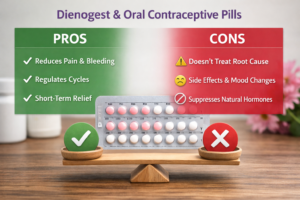
Dienogest and other oral contraceptive pills (OCPs) are commonly prescribed in the management of endometriosis, adenomyosis, PCOS, and chronic pelvic pain. Their primary goal is hormonal suppression—reducing estrogen-driven activity to alleviate symptoms such as pain, heavy bleeding, and disease progression. While these medications can be effective, it is important to understand both their benefits and limitations within a broader healing framework.
Pros
Dienogest, a progestin with anti-estrogenic effects, is particularly valued for its targeted action in endometriosis. It can reduce lesion activity, pelvic pain, and menstrual bleeding, often improving short-term quality of life. Compared to some combined OCPs, dienogest has a lower androgenic profile and is generally better tolerated in women sensitive to estrogen.
Combined oral contraceptive pills (containing estrogen and progestin) help regulate cycles, suppress ovulation, and reduce menstrual pain and bleeding. For some women, OCPs provide symptom predictability and relief from severe dysmenorrhea, acne, or cycle irregularity. In clinical practice, these medications can serve as a stabilizing tool during acute symptom phases.
Cons
Despite symptomatic relief, hormonal suppression does not address the root causes of hormonal disorders. Conditions such as endometriosis are driven by chronic inflammation, immune dysregulation, metabolic stress, and nervous system imbalance. OCPs may mask symptoms without resolving these underlying drivers, leading to recurrence once medication is stopped.
Long-term use may be associated with side effects such as mood changes, weight gain, reduced libido, headaches, nausea, and nutrient depletion (including B vitamins, magnesium, and zinc). Some women experience worsening anxiety or depressive symptoms, particularly those with existing nervous system sensitivity.
Another limitation is the suppression of the natural hormonal rhythm. Ovulation, progesterone production, and cycle-based hormonal signaling are paused, which may impact fertility planning and overall endocrine resilience over time.
A Balanced Perspective
Dienogest and OCPs are not inherently “good” or “bad.” They can be valuable tools when used strategically and with informed consent. However, sustainable healing requires a parallel focus on root cause correction—reducing inflammation, supporting gut and liver health, improving metabolic balance, and regulating stress.
When medication is combined with a systems-based approach, women are better supported both during treatment and beyond it.